Amber
Amber
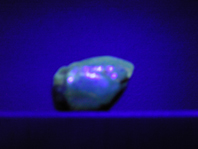
Amber is the fossilised resin of trees that grew between 30 and 90 million years ago. Resin is excreted from trees at points of damage, occasionally trapping insects, dirt and biological matter as is oozes from a gash in the tree or a point where a branch has been broken off. Artefacts found within amber provide scientists with a valuable window on the past. In cases where biological matter such as flies or seeds are found, information like DNA can be extracted to providing data on prehistoric life and the environmental conditions that supported it.
Amber is often used in jewellery and is prized for it's beauty but also has a number of properties that are less obvious. If one rubs a piece of amber with a material like wool, a static charge is generated as electrons are transferred from the wool to the amber. This means the amber becomes negatively charged and enables one to pick up small pieces of fluff or feathers with the hard resin. Another surprising property of amber is that it fluoresces green under ultraviolet light. This is due to the sulphur levels that are found within amber for the higher the sulphur content, the more vivid the fluorescence.